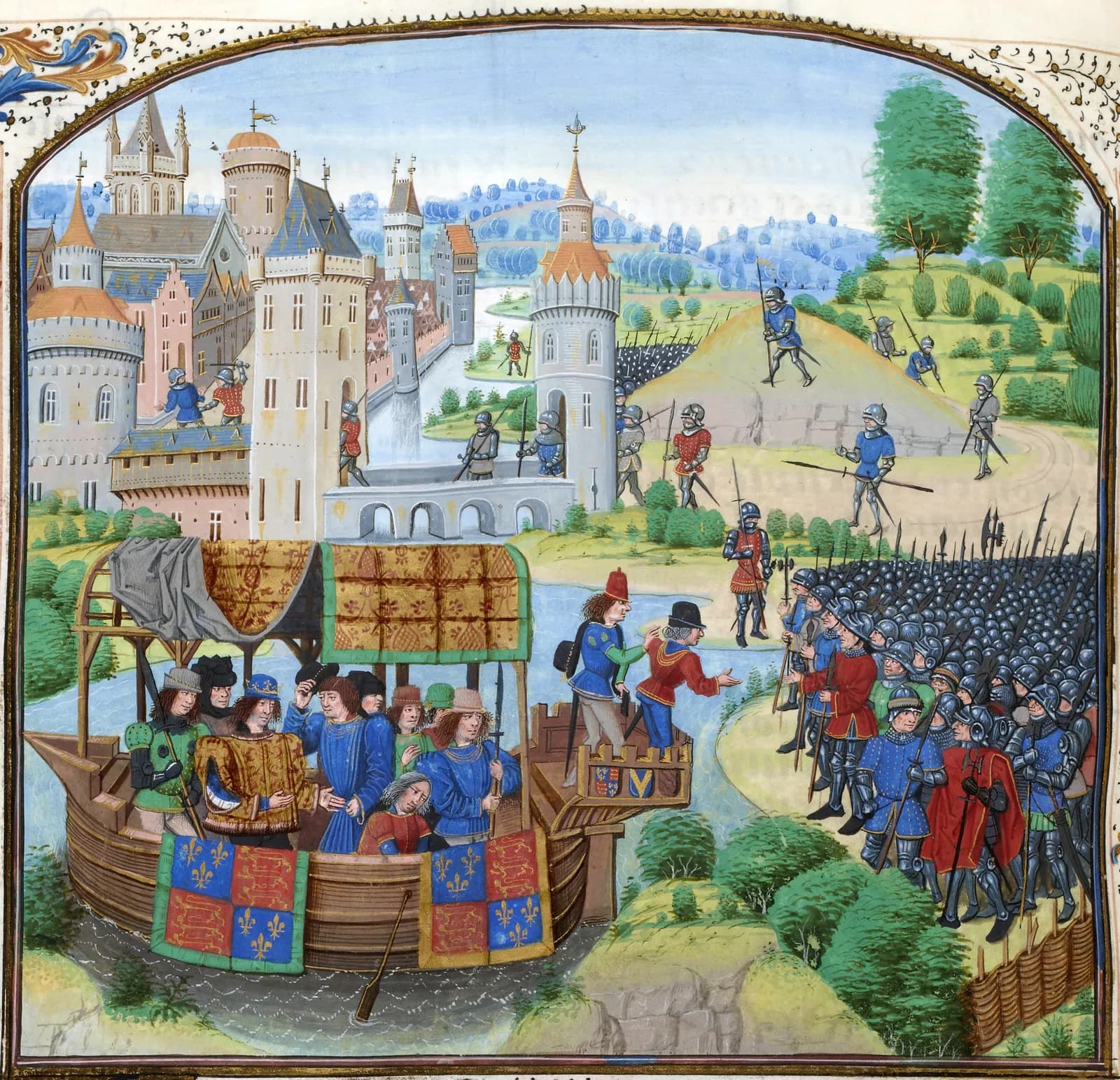
For six days in July 1381, Chelmsford served as the seat of English government. The young King Richard II brought his entire royal administration to the town following the suppression of the Peasants' Revolt, transforming the Essex county town into a temporary capital.
The King Arrives
Richard II arrived in Chelmsford on Monday 1 July 1381. The fourteen-year-old monarch was accompanied by his council, headed by the temporary Chancellor and the new chief justice, together with the full machinery of the royal chancery. The King probably lodged at the royal manor house at Writtle, some two miles west of Chelmsford town centre, where accommodation suitable for a monarch and his court was available.
Government Business in the County Town
During his six-day residence, Chelmsford functioned as the administrative heart of the kingdom. The royal administration drafted, engrossed, dated, and sealed the daily batches of commissions, mandates, letters, orders, and proclamations issued by the Crown. Messengers carried these documents to the farthest corners of the realm. The business conducted was twofold: pursuing the pacification of the kingdom in the revolt's aftermath, and managing the ordinary day-to-day affairs of government.
The Revocation of the Charters
The most significant act of Richard's Chelmsford stay occurred on 2 July 1381. While at the town, the King revoked the charters he had granted to the peasants during the revolt. These concessions, extracted under duress while the rebellion raged, had promised the abolition of serfdom and other feudal obligations. Richard's revocation at Chelmsford marked a decisive reversal of those concessions and a reassertion of royal authority.
Retribution at Primrose Hill
The suppression of the revolt continued while the government operated from Chelmsford. Many ringleaders of the rebellion were executed on the gallows at what is now Primrose Hill in the town. The executions formed part of the wider campaign of retribution that followed the collapse of the uprising.
The Broader Context
The Peasants' Revolt had erupted across England in late May 1381, fuelled by economic hardship, the unpopular poll tax, and resentment of feudal restrictions. The rebellion reached London, where the Kentish rebels, led by Wat Tyler, entered the city. The revolt was suppressed after Tyler was killed at Smithfield on 15 June 1381. Richard II subsequently moved to Chelmsford to consolidate royal authority and manage the aftermath.
Before leaving the town on Saturday 6 July, the young King had demonstrated that royal power remained intact. Richard personally went into Essex to suppress the remaining rebellion, defeating the last rebels at Billericay on 28 June 1381 in a small skirmish that effectively ended the Peasants' Revolt. Rebel leaders, including the radical priest John Ball, were hunted down and executed in the following days.
Chelmsford's Place in History
The week of 1 to 6 July 1381 represents a unique episode in Chelmsford's long history. For those six days, government business that would ordinarily have been conducted at Westminster or the Tower of London instead proceeded from this Essex market town. The historical record, drawn from contemporary administrative documents and later scholarship, confirms that Chelmsford briefly became what amounted to the capital of England.