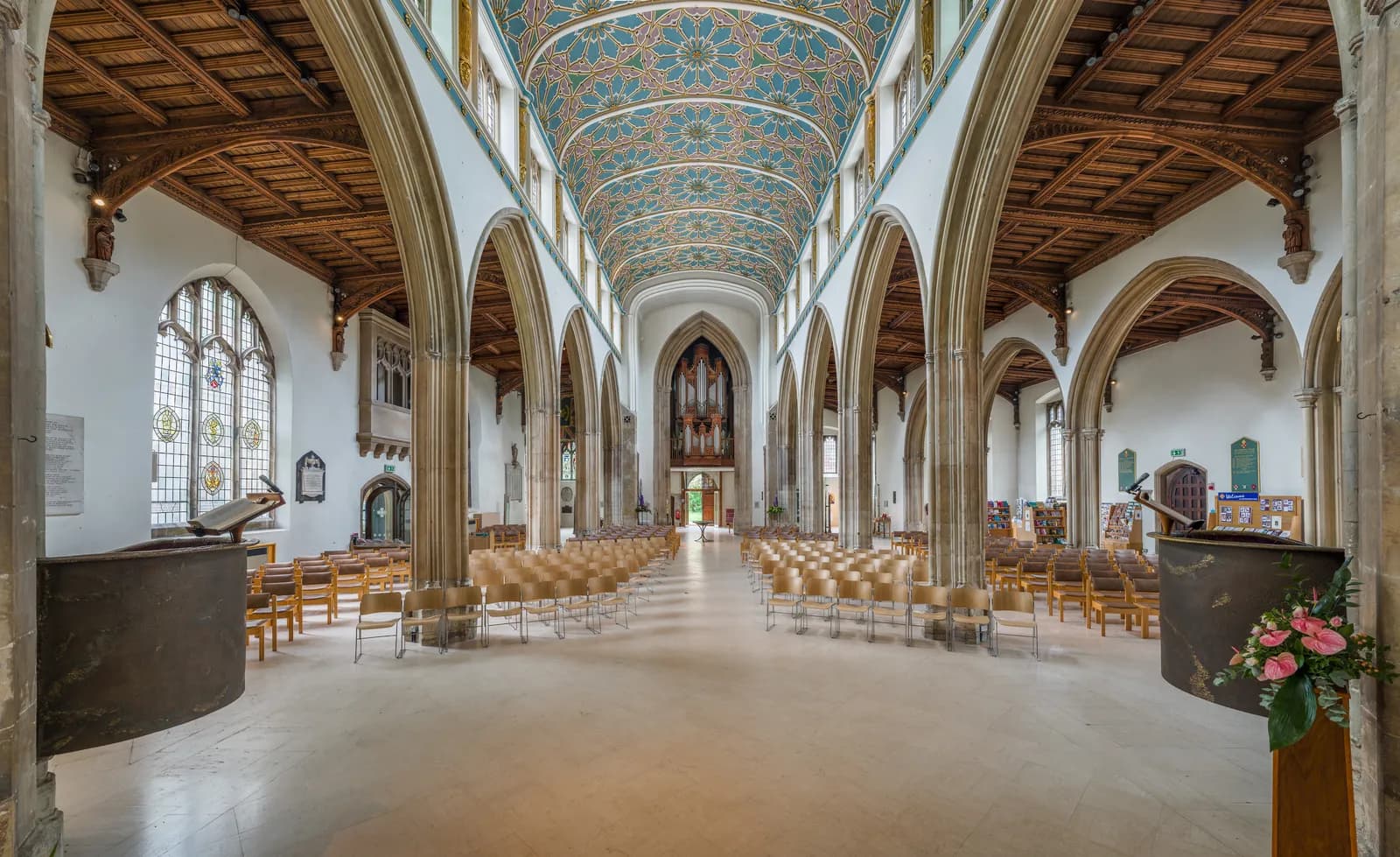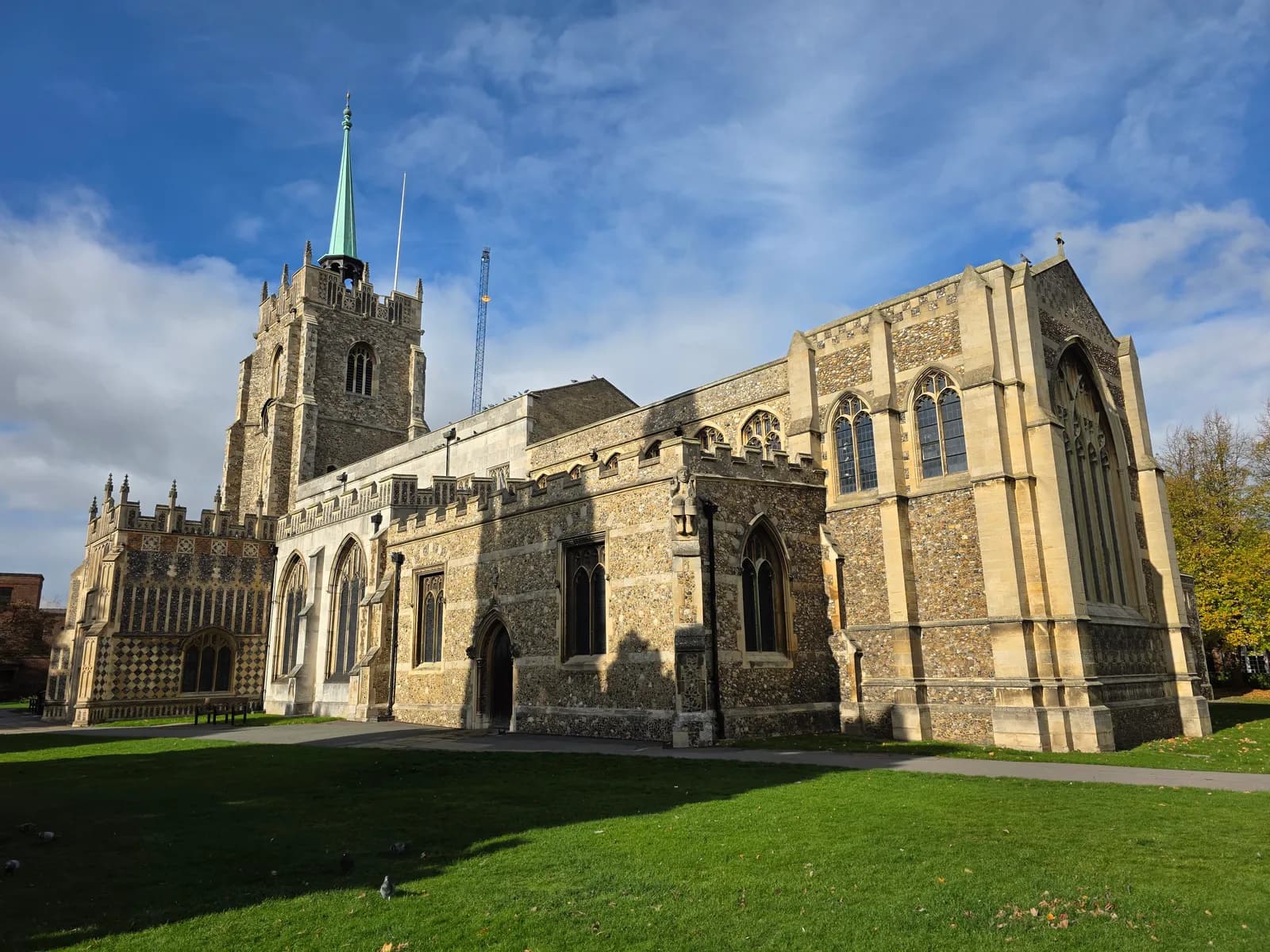
In the early 17th century, a Puritan minister stood in the pulpit of St Mary's Church in Chelmsford and preached sermons that would eventually reshape the foundations of government. Thomas Hooker, who served as town lecturer at what is now Chelmsford Cathedral between 1626 and 1629, developed the democratic principles that would later inspire the Fundamental Orders of Connecticut, often described as the world's first written constitution establishing representative government.
A Reputation for Preaching
Thomas Hooker was born on 5 July 1586 in Marefield, Leicestershire, into a Puritan family. He entered Queens' College, Cambridge in March 1604, later migrating to Emmanuel College, where he received his Bachelor of Arts in 1608 and Master of Arts in 1611. His reputation as a gifted preacher with considerable moral fervour spread quickly through Essex.
According to the Chelmsford City Council blue plaque installed in 1986, the people of Chelmsford invited Hooker to become their lecturer at St Mary's Church in 1625. He assumed the post around 1626, serving as curate to the rector, John Michaelson. The 1911 Encyclopædia Britannica records that Hooker delivered evangelical addresses on market days and Sunday afternoons, noted for their powerful moral conviction.
The timing of his arrival was significant. Chelmsford in the late 1620s was a market town known for its taverns and boisterous inhabitants, and was simultaneously contending with an outbreak of plague. Hooker's preaching resonated deeply with local people; his sermons drew substantial crowds who travelled to hear his message.
Suppression and Retreat to Little Baddow
Hooker's influence did not go unnoticed by ecclesiastical authorities. In 1629, Archbishop William Laud took measures to suppress church lectureships across England. Hooker was placed under bond and compelled to retire from his position at St Mary's.
He withdrew to Little Baddow, approximately four miles from Chelmsford, where he established a school. During this period, John Eliot, later known as the "Apostle to the Indians" for his missionary work in New England, served as Hooker's assistant. Hooker resided at Cuckoos Farm in the village during this transitional period, though his time there would be brief.
Flight to the Continent and Emigration
The pressure on Puritan ministers intensified. Summoned before the Court of High Commission, Hooker chose to forfeit his bond and flee. In 1630, he escaped to Rotterdam in the Netherlands, joining the community of English religious exiles already established there.
Following a clandestine return journey to England, Hooker emigrated to Massachusetts Bay Colony in 1633 aboard the Griffin. His arrival in New England marked the beginning of the phase of his life for which he is most widely remembered.
From Chelmsford Pulpit to Constitutional Legacy
On 31 May 1638, Hooker delivered a sermon at the First Church of Hartford that articulated the principle that would define his historical significance. He declared that "the foundation of authority is laid in the free consent of the people." The historian John Fiske later observed that Hooker "deserves more than any other man to be called the father" of American democracy.
On 14 January 1639 (Old Style), the Fundamental Orders of Connecticut were ratified, drawing directly upon Hooker's teachings. The document established a framework of government based upon the consent of the governed and remains a foundational text in the development of democratic institutions. The 1911 Britannica quotes Hooker's central conviction: "The choice of public magistrates belongs unto the people by God's own allowance," and notes his belief that the people retain the power "to set the bounds and limitations of the power and place unto which they call them."
Recognition in Modern Chelmsford
Today, a blue plaque fixed to the wall of a narrow alleyway opposite the south porch of Chelmsford Cathedral commemorates Hooker's contribution. The inscription reads: "Thomas Hooker, 1586–1647, Curate at St Mary's Church and Chelmsford Town Lecturer 1626–29. Founder of the State of Connecticut, Father of American Democracy."
Chelmsford Cathedral continues to celebrate its links with Hooker, acknowledging the three years he spent within its walls as formative in the development of ideas that would cross the Atlantic and influence the shape of representative government. Hooker died on 7 July 1647 in Hartford, Connecticut Colony, aged 61. His descendants include notable figures such as J. P. Morgan, President William Howard Taft, and theologian Jonathan Edwards.
The connection between this Essex market town and the foundations of American democracy remains a remarkable chapter in both local and transatlantic history.