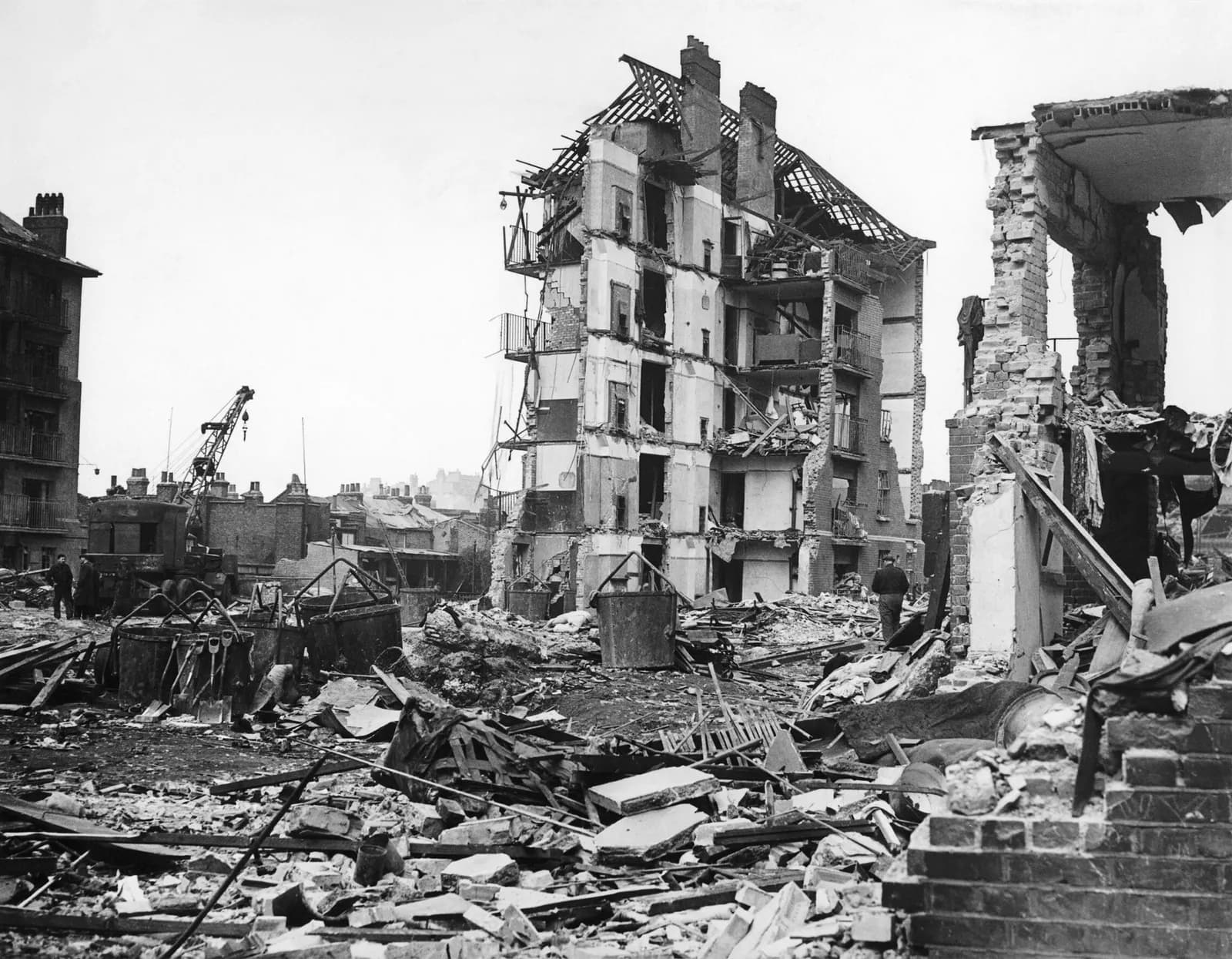
On the afternoon of 19 December 1944, a German V2 rocket struck Henry Road in Chelmsford, killing 39 people and injuring 138 others. The attack, which was the 367th V-2 rocket to hit England, destroyed homes and devastated the residential street in a matter of seconds.
The Attack on Henry Road
The rocket fell shortly before 1:30 pm on a Tuesday afternoon, striking the residential area near two critical wartime industrial facilities. The Hoffmann ball bearing factory and the Marconi Wireless Telegraph Company works in New Street lay close to the impact site. Both factories were significant contributors to Britain's war effort; Hoffmann manufactured ball bearings essential for military vehicles and aircraft, whilst Marconi produced wireless and radar equipment.
Several dwellings in Henry Road were completely destroyed in the explosion. Many more homes in surrounding streets sustained serious damage. The blast radius extended across the residential neighbourhood, causing casualties among residents who were at home during the working day.
Casualties and Aftermath
The attack claimed 39 lives. A further 138 people were injured, with 47 classified as seriously wounded. The death toll made this one of the most lethal V-2 incidents outside London during the war.
Local emergency services responded to the scene, though the nature of the damage and the number of casualties placed immense strain on Chelmsford's civil defence resources. The supersonic V-2 struck without warning, as was characteristic of these weapons; there was no air raid siren to alert residents, nor any opportunity to take shelter.
Chelmsford as a Strategic Target
The attack was not the first time Chelmsford had suffered wartime bombing. On 14 May 1943, a Luftwaffe raid on the town centre killed more than 50 people and left nearly 1,000 homeless. The town's concentration of light engineering and electronics manufacturing made it a persistent target for German forces.
The V-2 rocket was the world's first practical ballistic missile. Developed by Nazi Germany as a "vengeance weapon" (Vergeltungswaffe 2), it travelled at supersonic speed and carried a one-tonne warhead. The missile programme was designed to terrorise British civilians at a stage of the war when conventional German bombing had become increasingly ineffective.
Remembering the Victims
A monument to those who died in the Henry Road attack stands in Chelmsford City Cemetery on Writtle Road. The memorial serves as a permanent reminder of the civilian cost of the V-weapon campaign and the specific tragedy that befell this Essex town.
Between September 1944 and March 1945, more than 3,000 V-2 rockets were launched against targets including London, Antwerp, and Liège. The total death toll from V-2 attacks across all theatres is estimated at approximately 9,000 civilians and military personnel.